

 Español
  Deutsch
  Français
  Nederlands
  English
 What exactly is an ISO container?
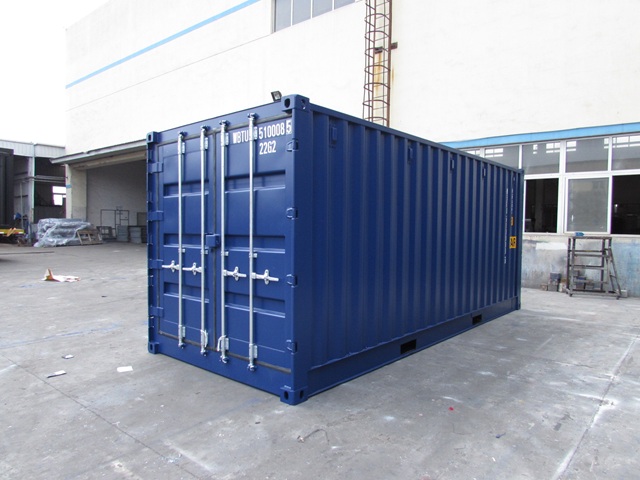
An ISO container is a standardized shipping container that complies with the guidelines of the International Organization for Standardization (ISO). This uniformity ensures they can be seamlessly transferred between ships, trains, and trucks.
Which ISO standards must shipping containers comply with?oen?
The main standards are ISO 668 (for dimensions and weights), ISO 1496 (for specifications and testing), and ISO 6346 (for coding, identification, and marking).
Which ISO standards must shipping containers comply with?
CSC stands for Convention for Safe Containers. This label is internationally mandatory and guarantees that the container's structure is safe for transport, lifting, and stacking.
How long is a CSC certificate valid after inspection?
A new container typically receives a CSC certificate valid for 5 years. After this period, the container must be periodically re-inspected (usually every 30 months) by a certified inspector (ACEP or ACEP-equivalent).
What is the difference between a 20ft and a 40ft container?
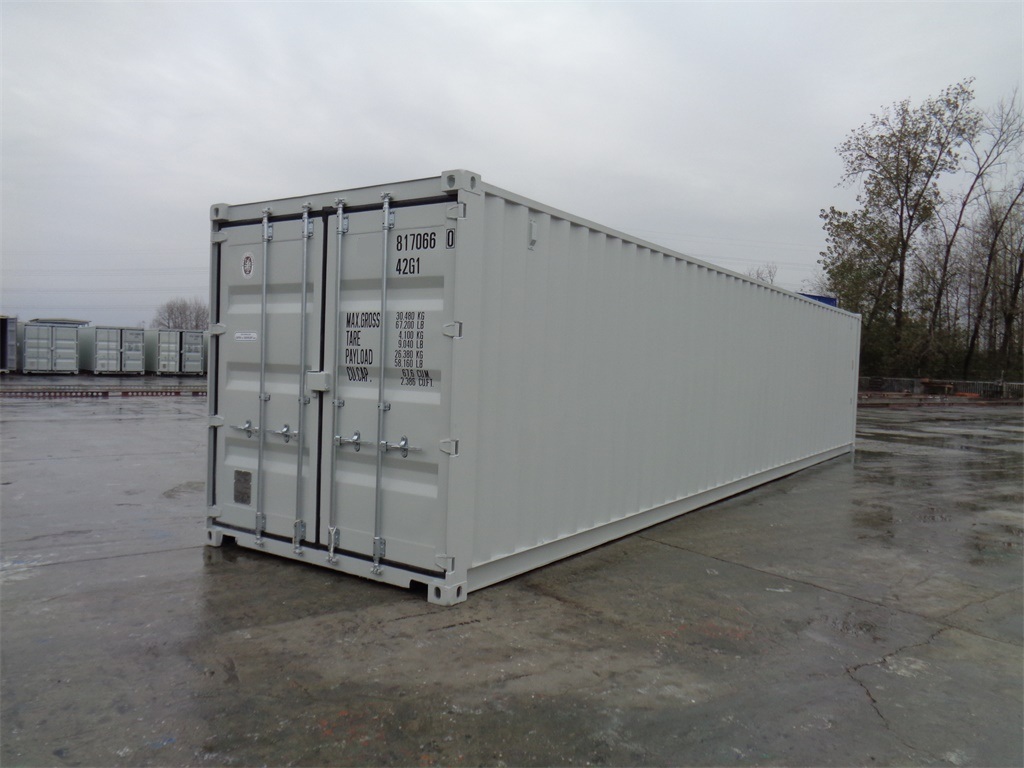
A 20ft container (TEU) is approximately 6 meters long, while a 40ft container (FEU) is about 12 meters long. The 40ft variant offers twice the length capacity, but the 20ft variant often has a higher maximum load weight per linear meter.
What does the abbreviation TEU mean?
TEU stands for Twenty-foot Equivalent Unit. This is the standard unit in the container and shipping industry to measure cargo capacity of ships and terminals (one 20ft container = 1 TEU).
What is the difference between a 'One Way' and a used container?
A 'One Way' container has only been used once for transport from the factory (often Asia) to Europe and is practically in new condition. A used container has served years of active duty, shows signs of use, but is still completely wind- and watertight.
Can I both buy and rent an ISO container at Wilbert Trading?
Yes, we offer both flexible rental options for temporary storage and purchase options for long-term use or custom modifications.
Are ISO containers resistant to all weather conditions?
Yes, they are designed for harsh open-sea conditions and are built entirely wind-, water-, and rodent-proof from corten steel.
What is the maximum load capacity of a standard container?
This depends on the type and the CSC plate, but for a standard 20ft container, the maximum gross weight (including the container itself) is typically around 30,480 kg, which translates to about 28 tons of net cargo.
What material are ISO containers made of?
The main structure and walls are manufactured from Corten steel (weathering steel), which provides excellent corrosion resistance and strength.
What is Corten steel and why is it used?
Corten steel is a metal alloy of steel to which copper, chromium, nickel, and phosphorus have been added. Upon exposure to outdoor air, it forms a stable rust-colored oxide layer that halts further deep corrosion.
What type of floor is standard in an ISO container?
Containers are standardly equipped with a strong marine plywood wooden floor (usually Apitong or hardwood of approx. 28 mm thick), treated to resist rot and insects.
Can a wooden container floor support heavy forklifts?
Yes, the floors are designed for point loads of industrial forklifts, provided the weight is within the specifications of the specific container (usually tested up to certain axle loads).
Are containers with a steel floor also available?
Yes, although less common for standard dry freight, specific executions (such as open top or flat racks) or modified containers are fully supplied in steel.
How thick are the steel walls of a standard container?
The corrugated wall panels typically have a steel thickness of approx. 1.6 mm to 2.0 mm, which combined with the profile provides enormous rigidity.
How is the corner structure of a container built?
Containers are fitted with strong ISO corner castings on all eight corners. These are the only points where a container is lifted, coupled, and stacked.
Can ISO containers be stacked on top of each other?
Yes, fully loaded standard shipping containers can be stacked multiple layers high on a ship or depot (often up to 9 layers high for 20ft units).
What is the function of ventilation grilles in a container?
Standard dry containers are equipped with small, labyrinth-shaped ventilation openings to prevent condensation caused by temperature fluctuations while remaining waterproof during rain.
Can containers be fitted with extra insulation?
Yes, for specific storage requirements we can equip containers with wall and roof insulation, optionally combined with interior paneling or climate control.
What is a 'Dry Van' (DV) container?
This is the most widely used standard closed container for dry general cargo, available in 20ft and 40ft variants.
What is the advantage of a 'High Cube' (HC) container?
A High Cube container is about 30 centimeters (1 foot) higher than a standard container (2.89 meters total), ideal for voluminous loads or extra headroom during conversion.
What is an 'Open Top' container?
An Open Top has no fixed steel roof, but an open top covered with a strong tarpaulin and movable roof bows. This allows goods to be loaded from above (e.g., using a crane).
When do you choose a 'Flat Rack' container?
A Flat Rack has no sides and often no fixed end walls (or collapsible end walls). This type is used for heavy, wide, or irregular cargo that does not fit into a closed container.
What is a 'Reefer' container?
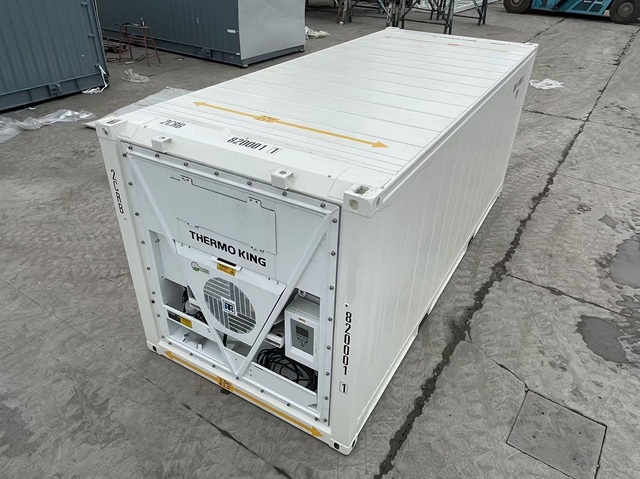
A Reefer is a refrigerated container with a built-in cooling and freezing unit to keep perishable goods (such as food or pharmaceuticals) at a constant temperature.
What are 'Side Door' or 'Open Side' containers?
Containers that feature full double doors on the side in addition to the regular doors on the end wall, greatly simplifying the loading and unloading of long or wide goods.
What is a 'Double Door' container (tunnel container)?
A container equipped with double doors on both end faces, giving you simultaneous access to the cargo from two sides.
Are mobile or smaller containers available?
Yes, there are also smaller formats such as 10ft containers, often deployed for construction site storage or tight locations where 20ft is too large.
Can ISO containers be used for alternative applications?
Certainly, ISO containers are very frequently used as a basis for mobile workshops, office units, generator enclosures, technical rooms, or pop-up stores.
What does a 'Tank container' entail?
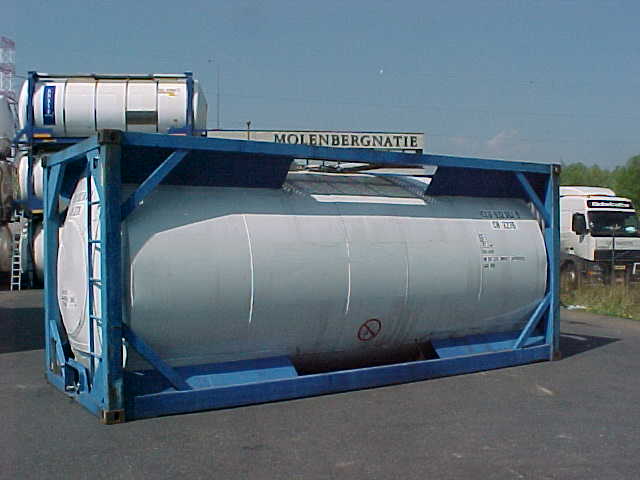
A tank container (ISO tank) is designed for the transport of liquids, gases, or hazardous materials and is built into a standard ISO frame.
How are ISO containers transported by road?
Usually via a container chassis behind a tractor unit, or via a truck with a loading crane (loader crane) if the container needs to be unloaded on-site itself.
Can a full container be lifted from the top?
Yes, provided it is lifted via the four upper corner castings using a special spreader or a certified lifting beam with four cables and chains.
Are you allowed to lift a container while it still contains cargo?
Yes, standard ISO containers are designed to be lifted in loaded condition, as long as the total weight does not exceed the maximum payload and the rigging equipment is correctly attached.
What should I pay attention to when placing a container on location?
The surface must be flat, paved, and stable (for example, concrete slabs or paving stones under the corner points) so that the container cannot sink and the doors latch properly.
How do you prevent doors from jamming after placement?
By leveling the container using strong shims under the corner points. If a container stands crooked, the doors will warp.
What security options are available against break-ins?
Containers can be equipped with a heavy-duty lock box combined with a certified security padlock to effectively prevent forced entry into the doors.
What about condensation inside a closed container?
Temperature fluctuations can cause condensation. This can be mitigated by choosing well-ventilated containers, using moisture absorbers (desiccant bags), or applying insulation.
Are containers fire-resistant?
The exterior is entirely made of non-combustible steel. Depending on the stored goods and any interior paneling, additional measures can be taken.
What does the CSC plate mean concretely for safety?
It proves that the container has been independently inspected and meets the requirements for international transport and mechanical loading.
Can Wilbert Trading fully handle transport and placement?
Yes, we manage the complete process from delivery to professional placement at your location using specialized transpo